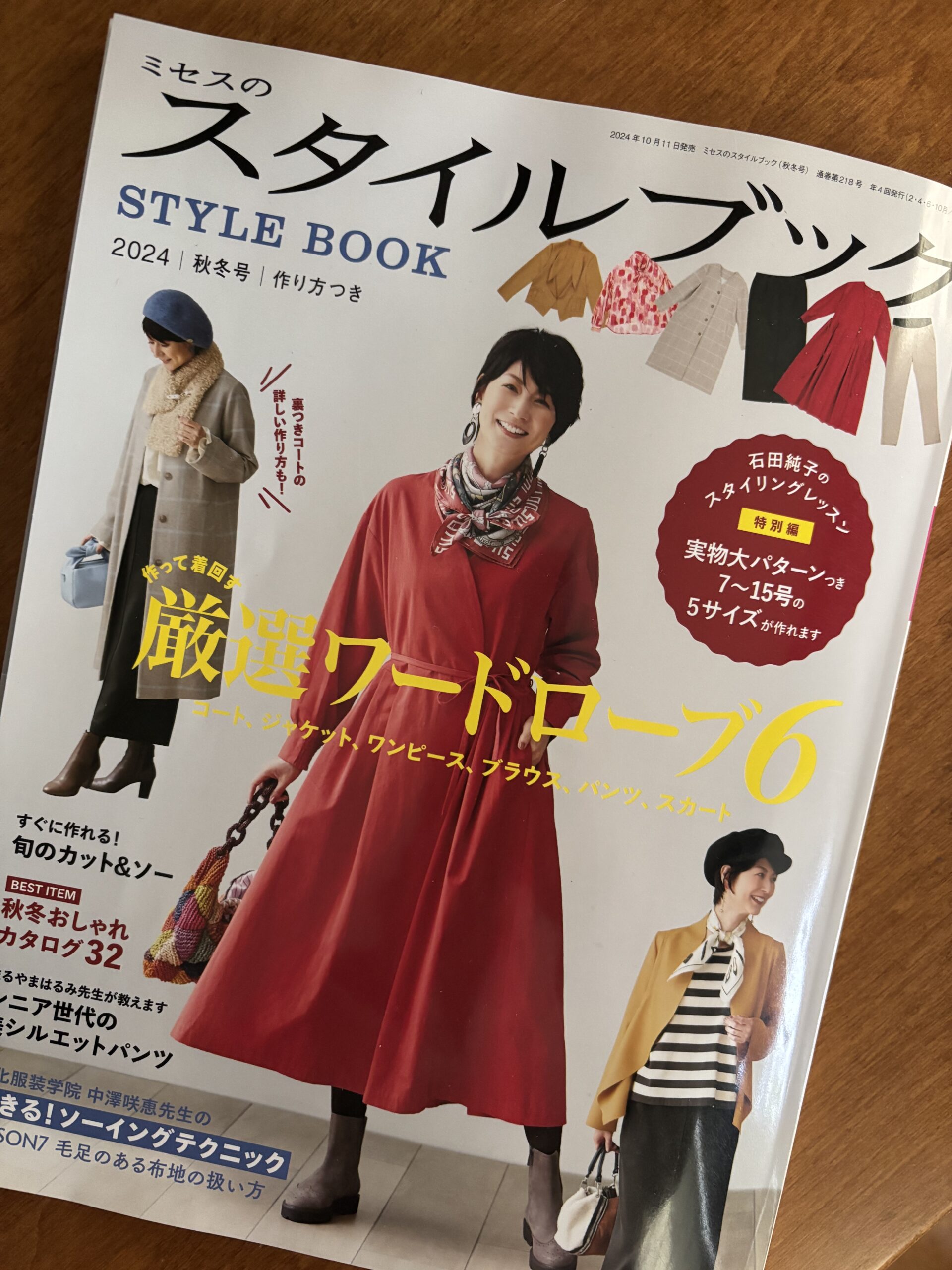
When I make clothes using Japanese sewing patterns, I am always amazed. The shoulders don’t sag. The waist hits where it should. The length is usually just right. I don’t have to make a ton of pattern adjustments. The fit is just as good as if I drafted the pattern myself using my personal measurements!
But this shouldn’t be a huge surprise. While my 5 foot 1 inch height is considered petite in the US (defined as a height below 5 foot 4 inches), it is pretty average in Japan. In fact, the average height of Japanese women is about 5 foot 2 inches (as reported in 2005). Japanese sewing patterns and ready-to-wear clothing are made to accommodate shorter heights, which is why the fit always seems so good to me.
Mismatched: Average Height and Clothing Fit
What is ironic is that the average height for women in the US is about 5 foot 3.5 inches. However, most US-based sewing patterns (and ready-to-wear clothing) are drafted for women who are about 5 foot 6 inches!
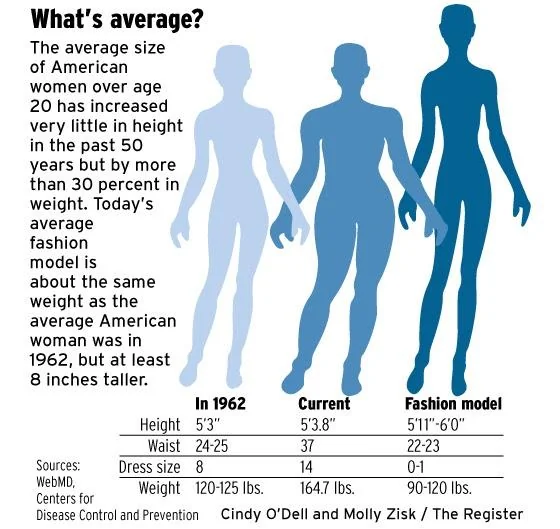
Image from here
One reason seems to be that the fashion industry has always favored tall and slim models. It would be difficult for designers to draft patterns for the average height of 5 foot 3.5 inches and grade them up to fit models who are several inches taller. By designing for a height and proportion of 5 foot 6 inches, it is easier to scale the clothes up to fit tall models and down to fit average women. But tall models will likely wear the clothes just for photo shoots (and will have them altered to fit for the shoots) while average women buying off-the-rack will wear the clothes many times (and may not have the chance to have them professionally altered).
For sewing patterns, I think the main US pattern companies (Simplicity, Vogue, McCalls, and Butterick) — also known as the Big 4 — likely started out using clothing industry standard measurements from ready-to-wear and have not changed with the times.
The Big 4 have always required the most fit adjustments for my petite frame. In addition to the length issues, there seems to be more “ease” built in to the patterns. Ease is the difference between body measurements and finished garment measurements and it varies by designer. BurdaStyle magazine patterns from Germany fit a bit better — I think the fit is closer to the body (less ease) than the Big 4 — but I still need to make a few adjustments.
Japanese Sewing Patterns for Shorter Women
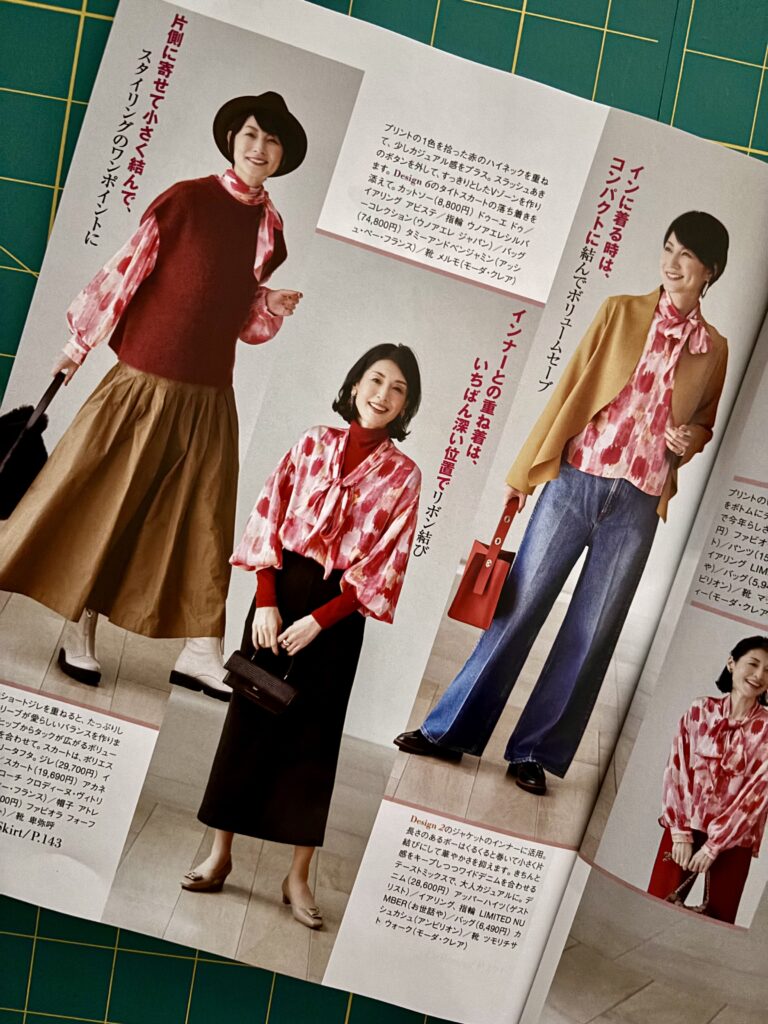
Mrs. Stylebook is a Japanese sewing magazine I’ve used for a few years. Unlike western sewing publications, most of the “patterns” are schematics that need to be reproduced into actual sewing patterns. Starting from a personal sloper — foundation patterns made from each person’s body measurements — each pattern piece is drafted using the schematics as a guide. Of course, using these patterns result in a custom fit.
I made the cape-coat below from the Autumn/Winter 2024 issue of Mrs. Stylebook. With such an oversized silhouette, fit wasn’t a huge issue, but it was a good way to practice drafting patterns using schematics and my personal sloper.
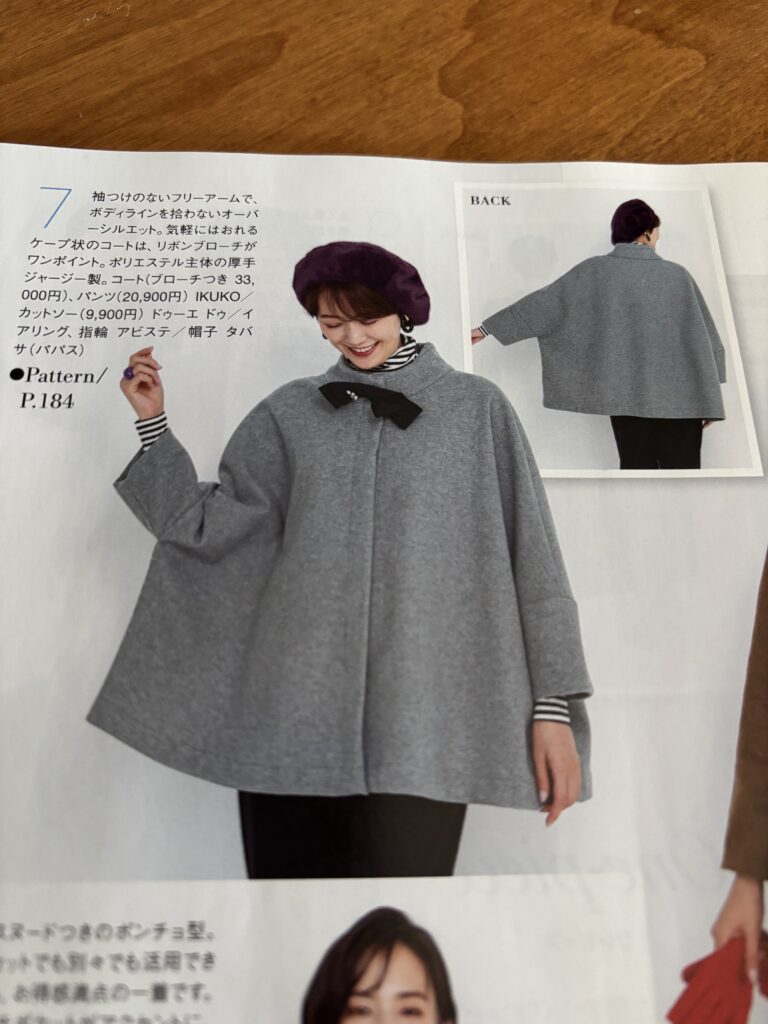
Japanese sewing patterns are often in magazines like Mrs. Stylebook. They include schematics and brief sewing instructions so personalized patterns can be drafted. They are definitely not for beginners!
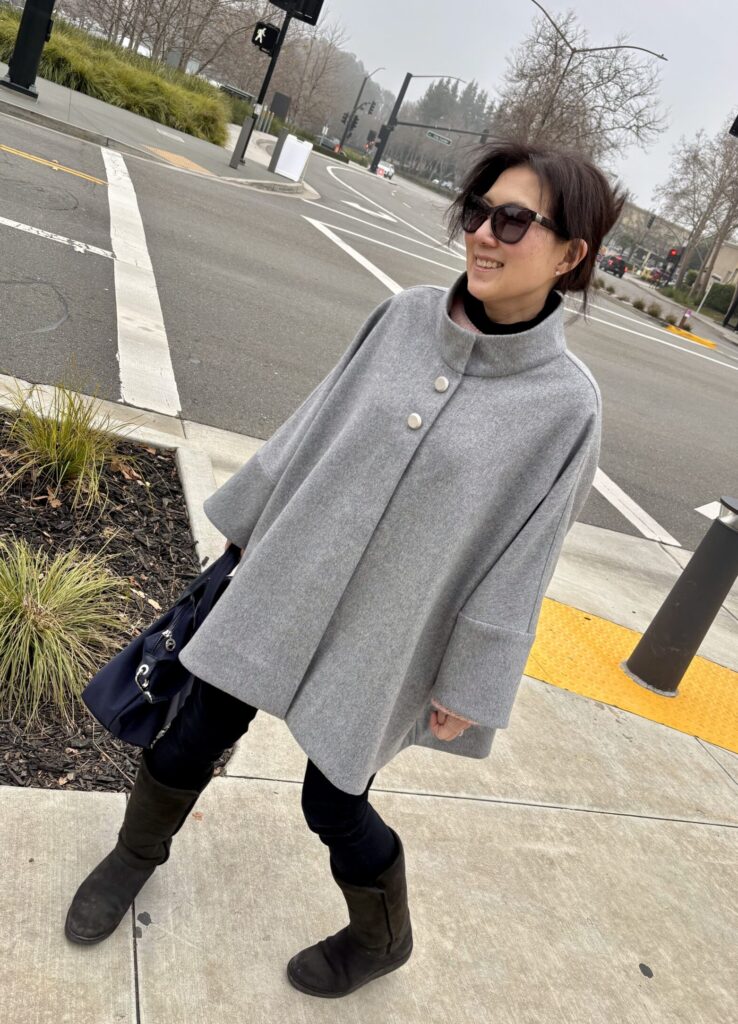
Sometimes Mrs. Stylebook and other Japanese publications include preprinted patterns similar to western patterns. I love these patterns because they result in a nearly custom fit.
Some differences that make these patterns fit better on shorter women:
- The shoulder width is narrower
- The sleeve width is narrower
- The sleeve length is shorter
- The length from shoulder to bust point is shorter
- The length from bust point to waist is shorter
- The length from waist to low hip is shorter
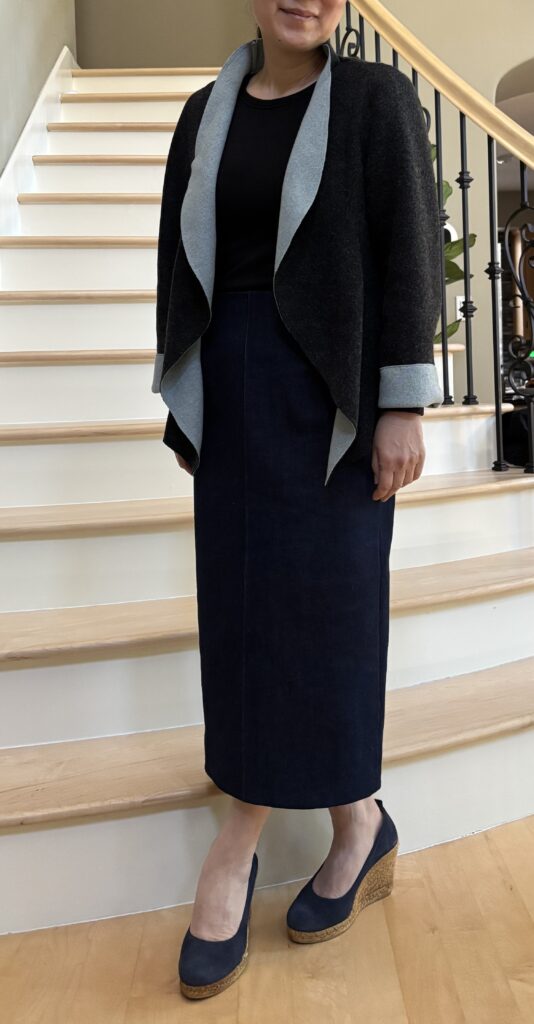
I made two garments from a recent issue of Mrs. Stylebook using their preprinted patterns: a drape-front jacket and a long straight skirt. I used a cool double-cloth fabric with two colors for the jacket and a stretch denim for the skirt.
In the photo below, it is difficult to see some of the fit details for both pieces due to the dark colors, but they do fit well!
Leave a Reply
You must be logged in to post a comment.