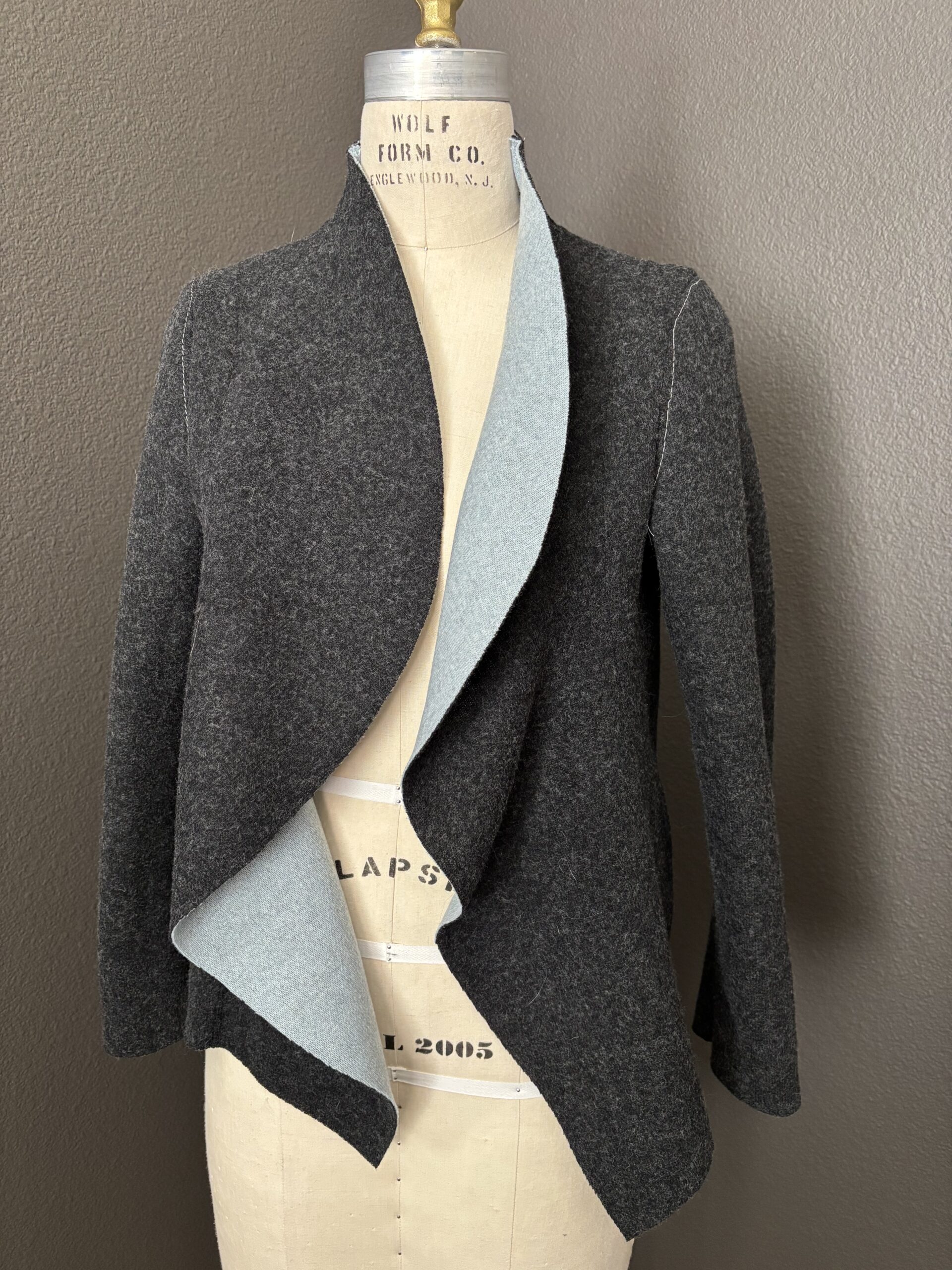
I finally had the chance to sew with double cloth fabric and loved it!
Double cloth is a reversible fabric that can be separated into two pieces of cloth. The two pieces are not always the same type or color, which makes for interesting design opportunities. For example, the fabric I used is a charcoal gray boiled wool on one side and a pale blue sweater knit on the other!
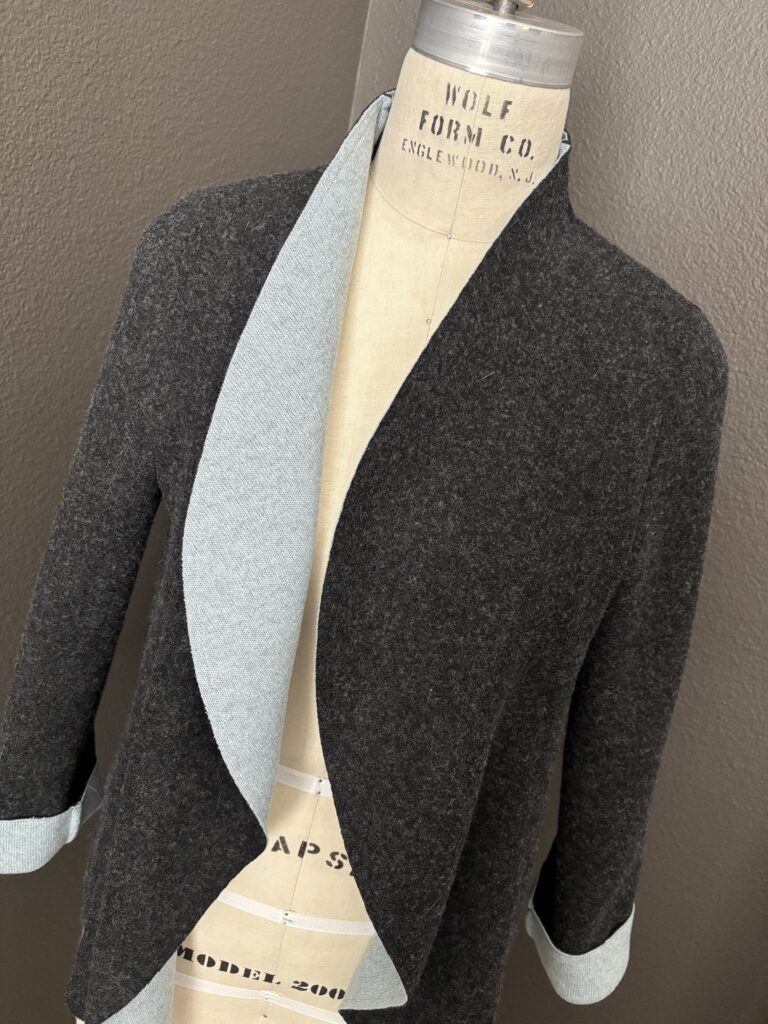
The double cloth layers are attached by threads that can be cut to separate them. The process of gently pulling the layers apart and cutting the threads can be tedious and time consuming, but it allows for clean-finished seams that are perfect for unlined or reversible garments.
Process for Sewing Double Cloth Fabric
I found a great resource for sewing double cloth fabric using clean-finished seams here. Check it out and then start practicing with scraps before trying the technique on a project. Practice really does make perfect!
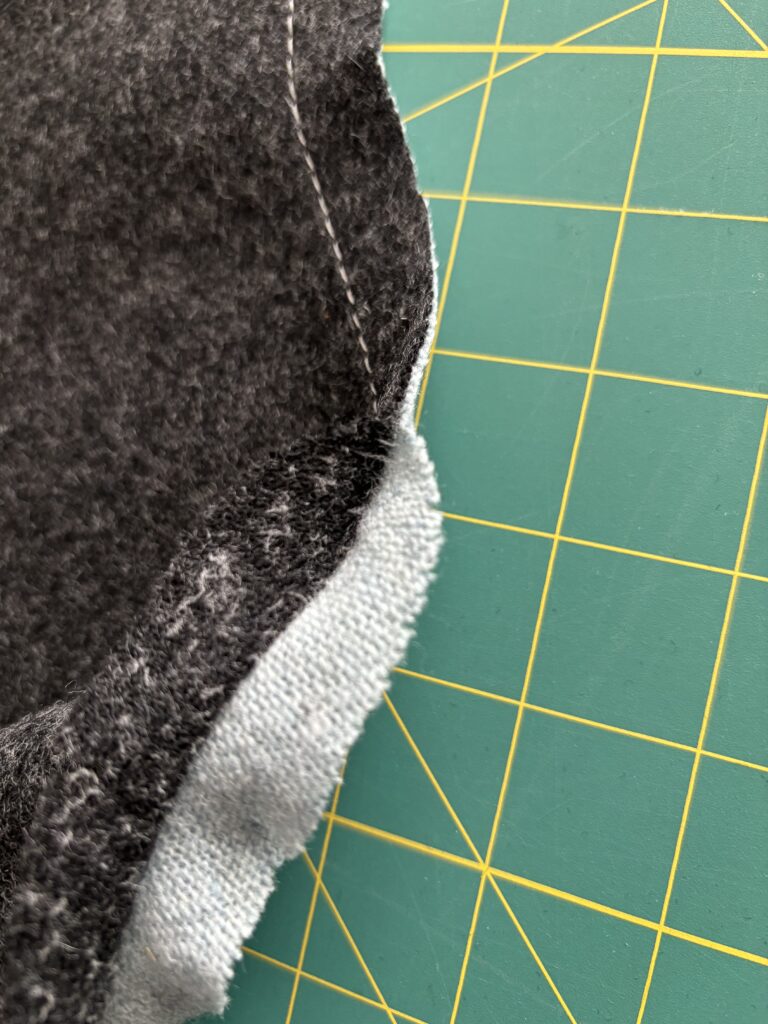
For each clean-finished seam, sew a basted guide stitch (in a contrast thread) about 0.25 inches larger than the seam allowance (for me, I use 0.5-inch seams so I stitched the basted guide stitch at 0.75 inches). Pull the layers apart and trim the connecting threads to cleanly separate the two fabrics up to the basted guide stitch.
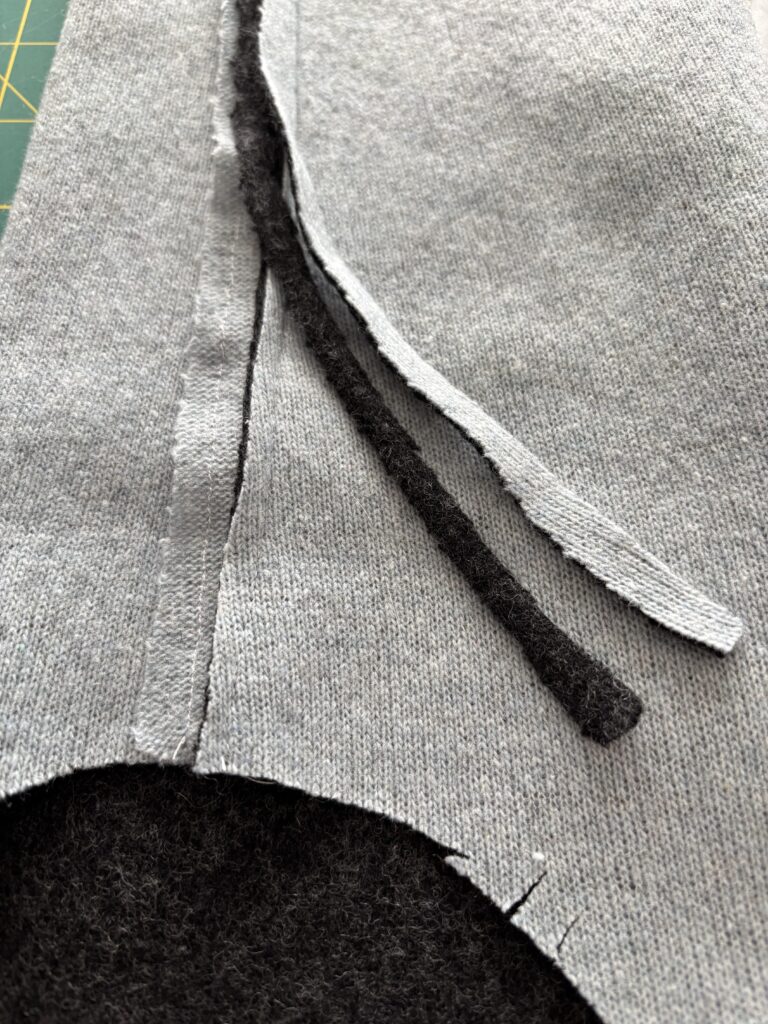
Decide which layer will “cover” the raw edges. For my project, I chose the pale blue sweater knit as the “cover”. Because I have a 0.5-inch seam allowance, I stitched a line (normal stitch setting with color-matched thread) about 0.25 inches from the raw edge of the pale blue sweater knit layer. This line serves as a guide for the handstitching used to enclose the seam. Then, stitch the separated layer that will not be the “cover” to the other side or piece. Trim the seam allowances that will not serve as the “cover”.
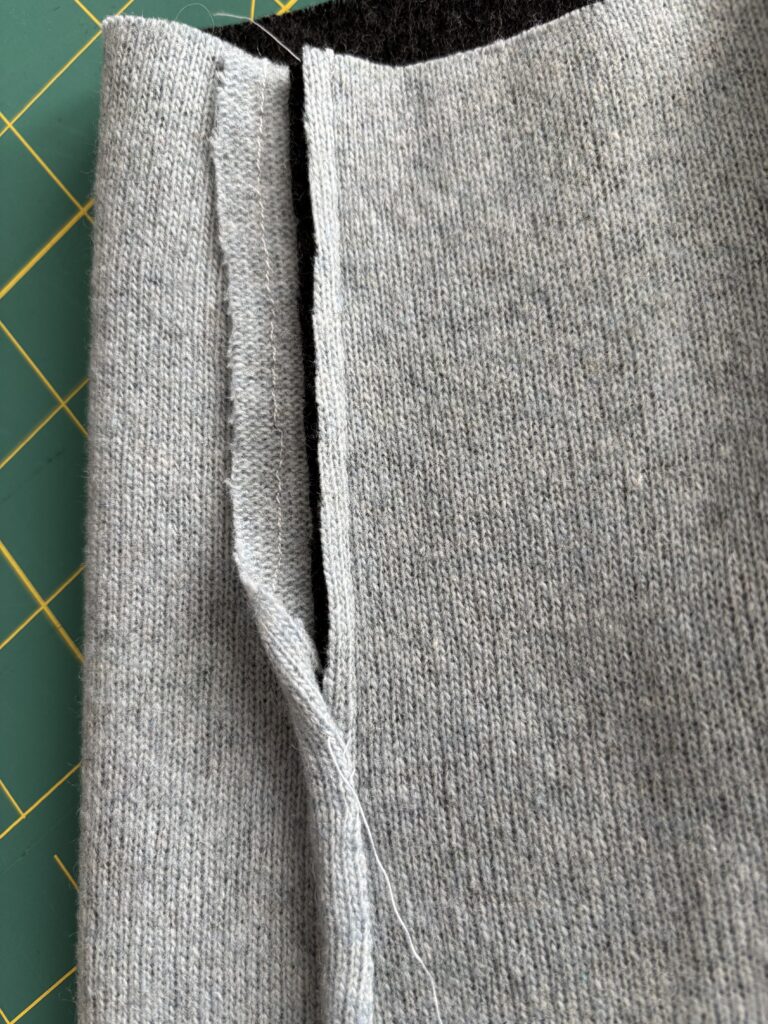
Fold over the “cover” using the stitching line as a guide and pin to enclose to make sure the enclosed seam looks even. Hand sew to enclose the seam. Remove the basted guide stitches.
Some Tips
Plan before you sew
For clean-finished seams where the raw edges are hidden and enclosed, planning the order of sewing is key.
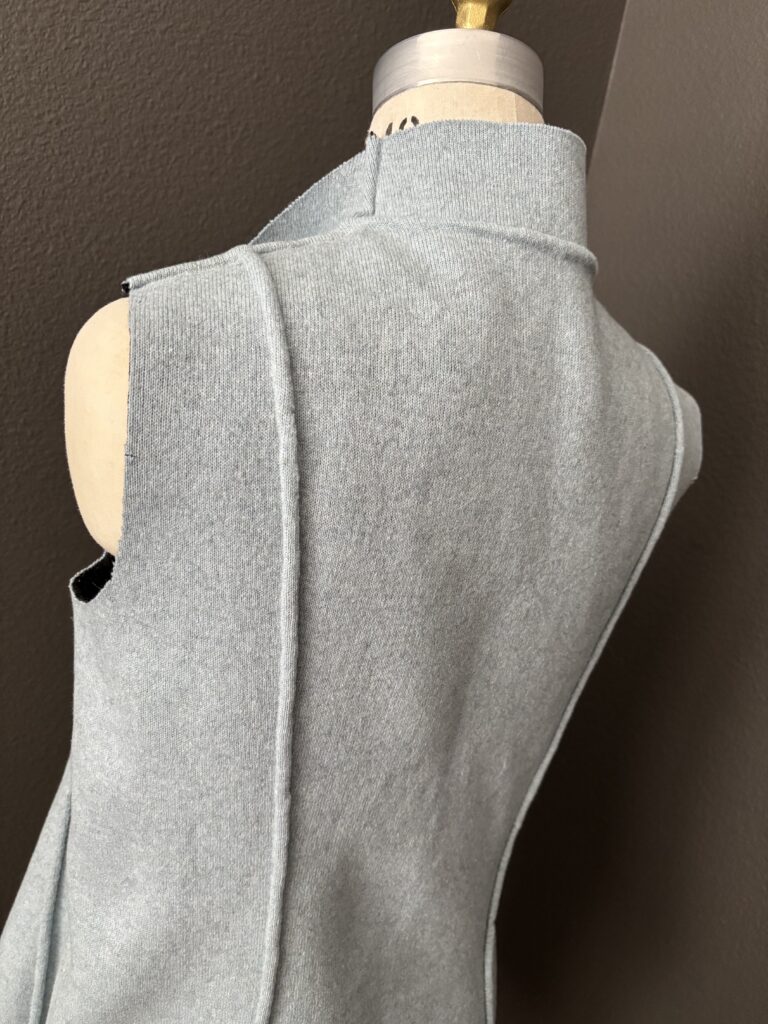
For example, if the front and back have princess seams running vertically, those seams are sewn and finished first. Then the shoulder seams are sewn together, which will require sewing across the princess seams. In order to clean finish the shoulder seams, part of the princess seams will need to remain unfinished.
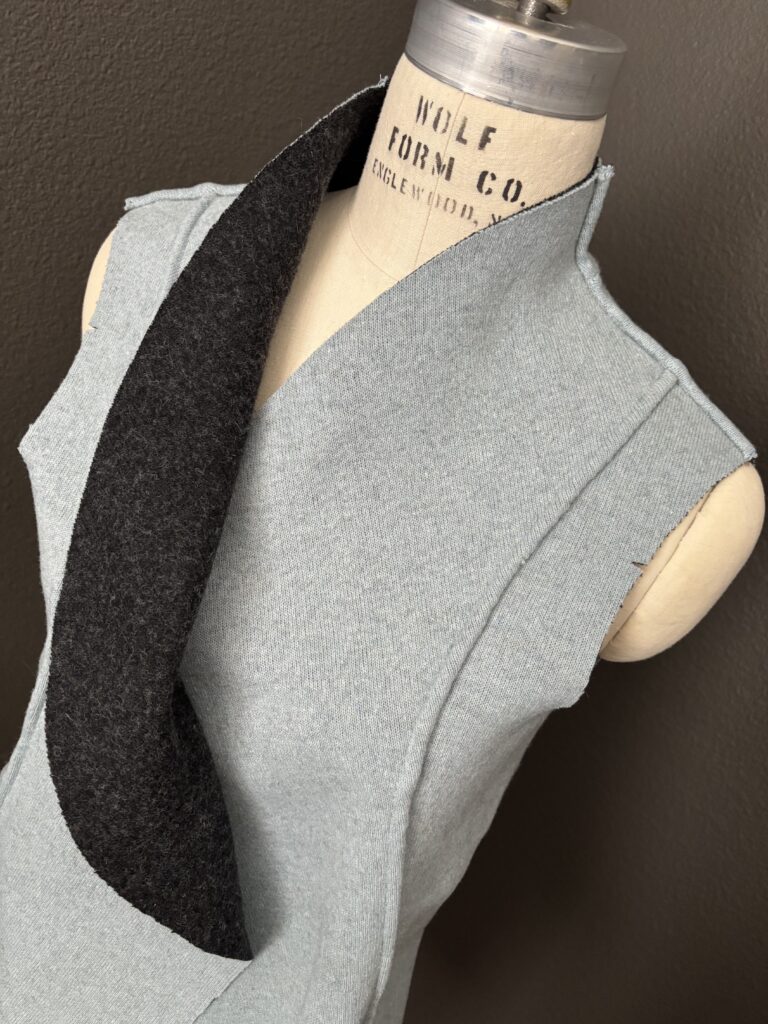
Here’s an example of where I didn’t think things through. I wasn’t sure how I wanted to finish the front edges — clean finish or leave unfinished with just a line of stitching along the edges. Instead of finishing the shoulder seam all the way to the top of the collar, I should have stopped before the seam allowance so I could have the option to clean finish the collar along the top edge. For the armhole, the shoulder seam running to the edge is fine because the sleeve seam allowance will “cover” the raw edges.
Perfect the fit with a toile or muslin
Clean finishing a garment made of double cloth fabric requires a lot of time and labor, so perfecting the fit with a toile or muslin — and making any required pattern alterations — ahead of time is important. Making the toile or muslin in a similar weight fabric might be helpful as well.
Play around with trimming
For the most beautiful finish, trimming the seams so the “cover” seam can lie straight and even is an important step. Use samples to determine how much can be trimmed from each seam to get the cleanest finishing.
Prepare for a lot of hand sewing
What makes the clean finishing on double cloth fabrics so beautiful is the hand sewing. It is so worth it to take the time and stitch slowly and carefully. Consider prepping the thread with beeswax so it doesn’t tangle while sewing.
Resources
Very helpful information on double cloth sewing techniques: The Pattern Line
German language youtube videos with helpful visuals:
https://www.youtube.com/watch?v=ZmGUNKpgCbc
https://www.youtube.com/watch?v=d5yIagp-8xQ
Articles on sewing double cloth fabrics (need a subscription): Threads
Leave a Reply