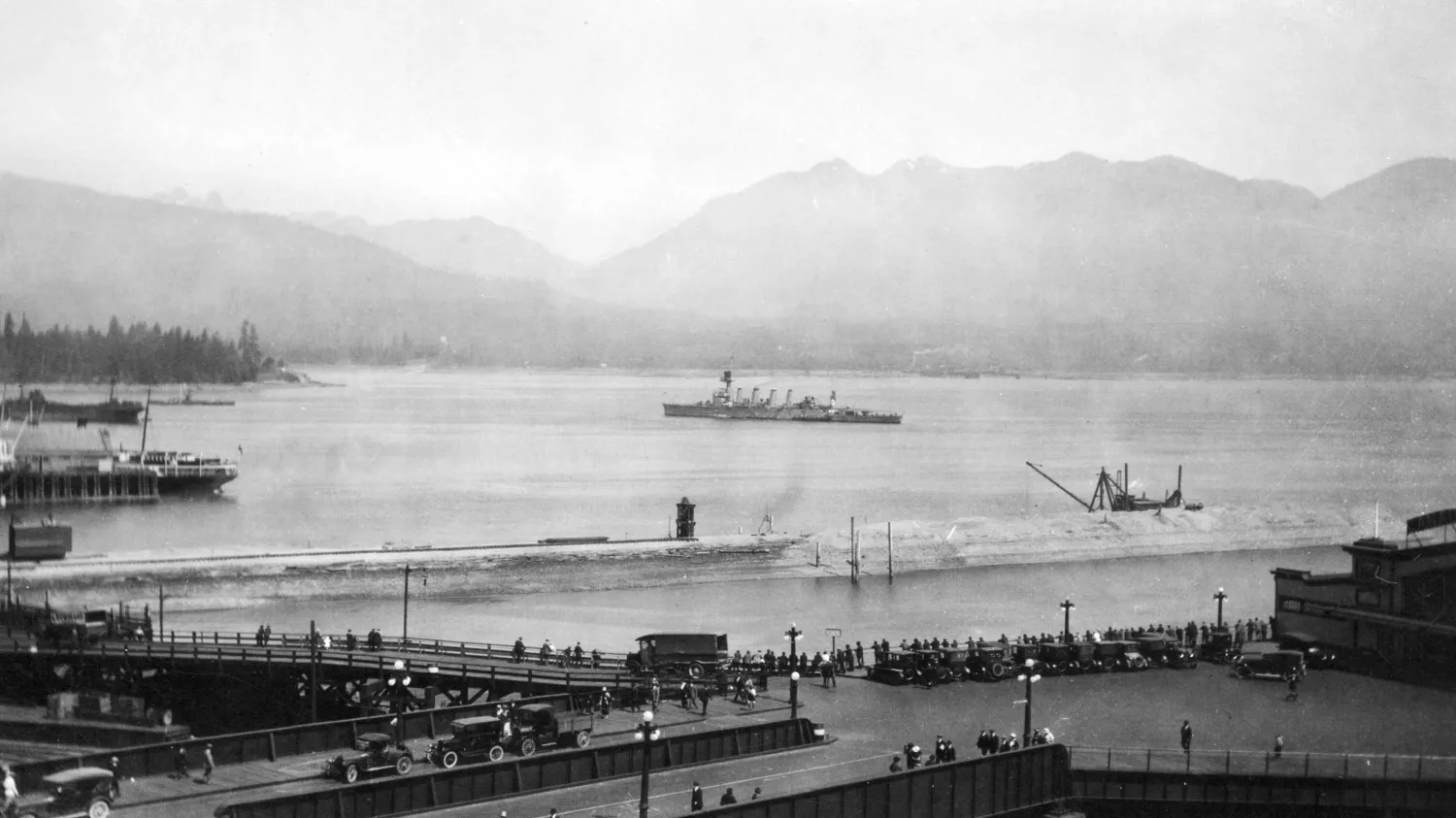
When the story about my grandfather’s journey from Hiroshima to Canada (and back again) was published on the Discover Nikkei website, I did not expect to receive any feedback. So I was pleasantly surprised to find a thoughtful and detailed message from a reader residing in Hiroshima, Japan.
As a retired history professor who conducted his own research into his family history, he provided a unique perspective on a couple of open questions I had regarding my grandfather’s story.
Is it “Oufun te” or “Oufu ni te”?
On the back of my grandfather’s photograph, there was a line of text written in katakana (the Japanese phonetic alphabet generally used to spell out foreign words) that didn’t seem to make sense. I translated it to “oufun te” and thought it might have been shorthand for “Orpheum Theater”, which was a large movie house in Vancouver, Canada. I wasn’t sure if the second to the last character was “un” or “ni”, but chose “un”, which supported my speculation about the word referring to the Orpheum.
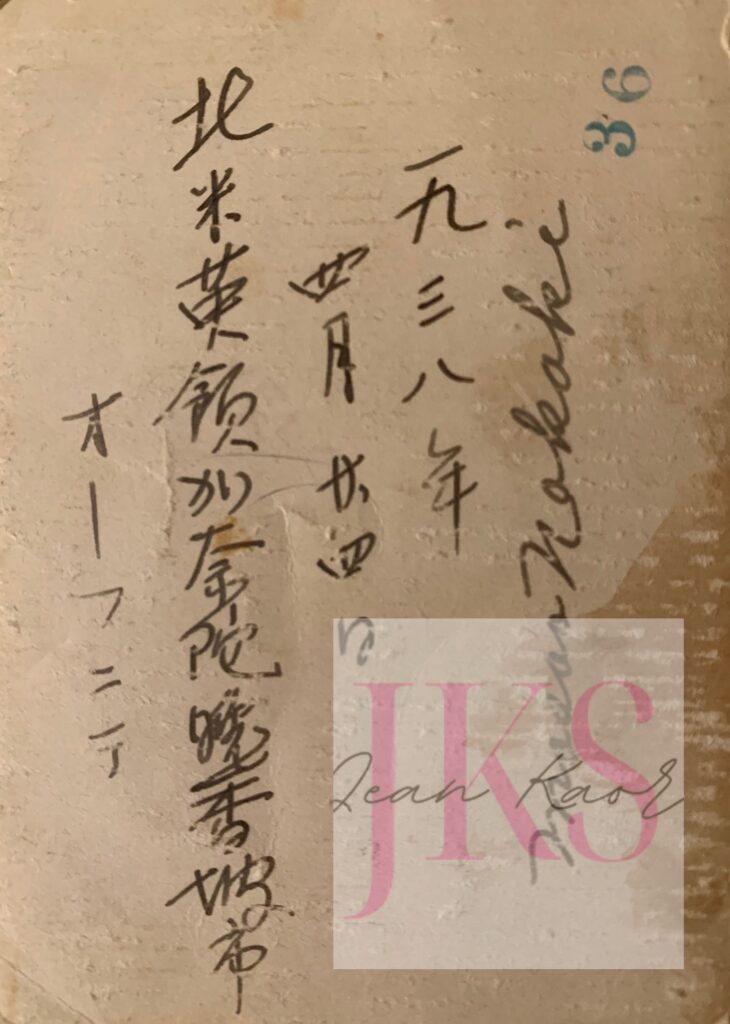
However, the reader provided an alternative interpretation, which I think makes more sense. He thought the katakana read “oufu ni te”, which translates to “at the wharf”. He speculated that the word “wharf” would have sounded like “oufu” to the Japanese ear at that time. He also said that when a place is named on the back of a photograph, “ni te” or “at the” is often used.
Because all of the characters were written in katakana, I thought it would have been one word. I think the reader’s interpretation is correct, but strictly speaking, it should have been written as follows: “oufu” in katakana and “ni te” in hiragana ( the phonetic alphabet used for Japanese words). Perhaps my grandfather was too lazy to switch to hiragana and wrote everything in katakana!
Was my grandfather’s intent to stay in Canada?
My grandfather’s journey was unique in many ways, but the most surprising was the fact that he went to Canada twice — once as a single young man and then as a newly married man — but ultimately returned to Japan without permanently emigrating.
After pausing my research and writing the story, I wondered what his intent had been. It seemed odd to me that he would return to Japan, marry my grandmother, and then go back to Canada — all within the span of a few months. It seems that his second trip to Canada meant he was serious about emigrating permanently, but why leave his new wife in Japan?
The reader speculated that the decision to stay in Canada may have been contingent on my grandmother’s wishes. As a young bride of about 17 years old, my grandmother may have agreed to move to Canada but perhaps the family requested that she wait until she was older or ready to move. Perhaps my grandfather left his new bride so he could continue to earn money in Canada and then see if she would be willing to join him. Or perhaps there was a waiting period for being able to emigrate, as there were severe restrictions on Japanese entering Canada at that time.
My grandfather’s Canadian adventure ended three years later, when he returned to Japan in 1938. The family story is that he became ill, which prompted his return. It is possible that he intended to convalesce in Japan and then go back to Canada, possibly with my grandmother, but with the impending war, it may have been impossible. Soon after the war ended, he passed away.
While I will never know his intention for certain, it seems plausible that he wanted to emigrate to Canada and build a life there with my grandmother. I have to admit that I have a hard time imagining that my grandmother — who loved fashion, music, and the arts — would have wanted to move to Canada at such a young age and labor in the fields, but perhaps she didn’t have a clear picture of what life in Canada would have been like. Maybe she dodged a bullet!
I am thankful to Discover Nikkei for the opportunity to share my story and communicate with readers from around the world!
Leave a Reply